
By Vivek Singhal
Thinking of the Future, Acting in the Present™
For over three centuries, the global order has been defined by the pursuit of dominance. From the colonial empires of the 19th century to the rigid bipolarity of the Cold War, the prevailing logic of international relations has been zero-sum. The assumption has remained stubborn: power is a finite resource, and for one nation to rise, another must inevitably decline.
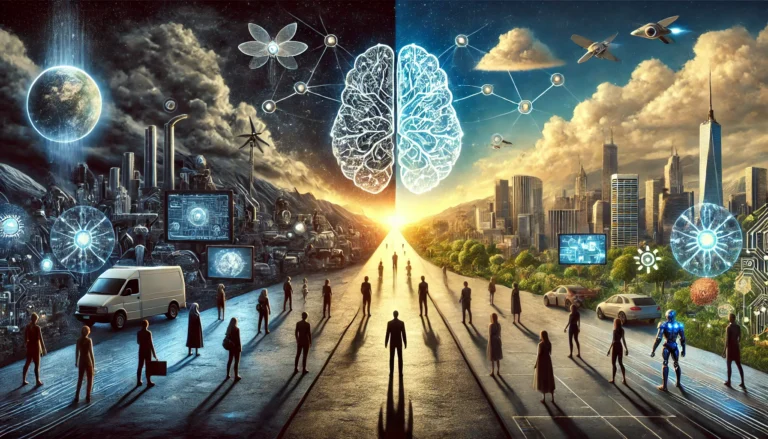
However, as we navigate the mid-2020s, this blueprint is fracturing. Our most pressing challenges—from the climate crisis and systemic economic instability to the existential governance of emerging technologies—do not respect national borders. These are not problems that can be solved by the hegemony of a single power. We are witnessing a historic transition: the shift from an era defined by geopolitical competition to one that necessitates civilizational cooperation.
The Power of Vision: Looking Back to Move Forward
To understand how we can reframe our global trajectory, we must look to moments in history where leaders chose imagination over fear.
I often reflect on Swami Vivekananda’s historic 1893 address in Chicago. At a time when the world was gripped by imperial competition and parochialism, he stood before the Parliament of the World’s Religions and spoke of “universal acceptance” rather than mere tolerance. He envisioned a world where civilizations learned from one another rather than seeking to subjugate one another. It was a call for a profound dialogue between cultures—a philosophy that remains the most potent antidote to the friction we see in today’s international arena.
Similarly, I am reminded of John F. Kennedy’s “New Frontier” vision in the early 1960s. Following the Russian Sputnik launch, the world expected the United States to respond with defensive, reactionary posturing. Instead, Kennedy redirected that anxiety into an aspirational goal: landing a man on the moon. He understood that when you provide humanity with a “New Frontier”—a common objective that transcends current political squabbles—you turn competitors into innovators.
The Failure of the Dominance Paradigm
The traditional geopolitical mindset relies on the “Security Dilemma,” where one state’s attempt to increase its security is perceived as an existential threat by its neighbor. This logic is not just outdated; it is dangerous. In our hyper-connected global economy, a supply chain disruption in one hemisphere creates an immediate inflationary crisis in another. The “dominance” model is structurally incapable of managing the complexity of modern existence.
Shifting to a Civilizational Framework
A new blueprint for the 21st century must pivot from geopolitics—the narrow struggle for territorial and military control—to civilizational cooperation. This shift requires three fundamental changes:
1. From Retaliation to Resilience: Diplomacy has long been reactive. A cooperation-first model prioritizes shared infrastructure. Like the collaborative effort required to reach the moon, we need global “moonshots” for climate mitigation, energy transition, and pandemic preparedness.
2. Multicultural Pluralism: We must accept that different civilizations—Eastern, Western, and the Global South—bring distinct philosophical values to the table. As Vivekananda suggested, cooperation is most durable when it is inclusive, not when it demands cultural homogenization.
3. Human-Centric Security: True security is no longer just the absence of war; it is the presence of stability. A nation’s success should be measured by the prosperity and well-being of its citizens, not by its ability to exert pressure on others.
The Path Forward
We are currently caught in an “interregnum”—a period where the old world of dominance is dying, but the new one is not yet fully born. To bridge this gap, we need the courage to frame our current anxieties as catalysts for progress.
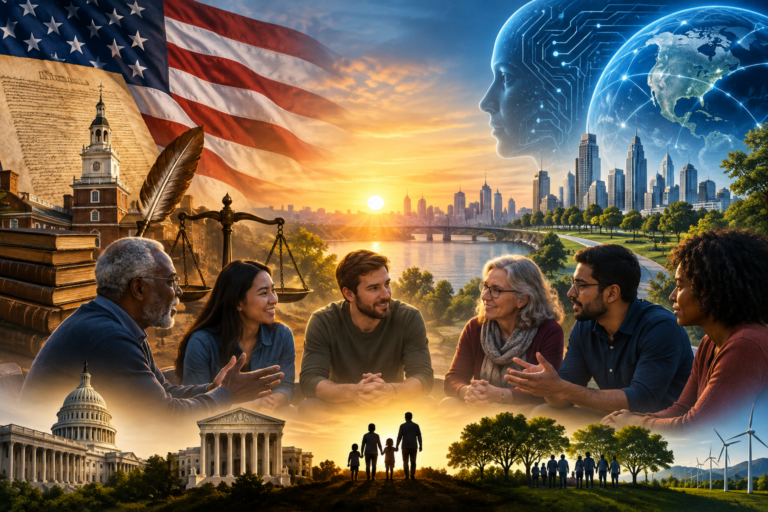
We are no longer competing for a finite piece of the map; we are cooperating to ensure the map remains habitable for future generations. The blueprint for the 21st century must be written in the language of shared survival and collective ambition. It is time to move past the zero-sum games of the past and look, as Kennedy did, toward a new horizon—one where our civilizational diversity becomes our greatest strength rather than our primary point of friction.