Part 6 blog series about From Education to Credentialed Obedience: How the Post-WWII World Manufactured the “Stupid Generation” — An OSHO-Inspired Reflection
Modern societies are experiencing a growing crisis that extends beyond politics or technology: the collapse of shared reality. People increasingly live inside fragmented informational worlds shaped by algorithms, ideological communities, and personalized media environments. Individuals consuming entirely different streams of information often develop radically different interpretations of events, truth, and reality itself. As societies become more digitally connected, they paradoxically become more psychologically divided. This fragmentation weakens trust, intensifies polarization, and makes meaningful collective understanding increasingly difficult to maintain.
Civilizations depend on some degree of shared reality in order to function coherently. Without common reference points, societies struggle to cooperate, solve problems, or sustain social stability. The digital age is challenging that foundation in unprecedented ways.
Fragmented Information Ecosystems
In previous eras, societies generally relied on a smaller number of shared institutions and media sources that helped shape a collective understanding of events. While these systems were never perfect, they provided a common informational framework through which public dialogue could occur. Today, digital platforms and algorithmic systems have replaced that shared framework with highly personalized information environments.
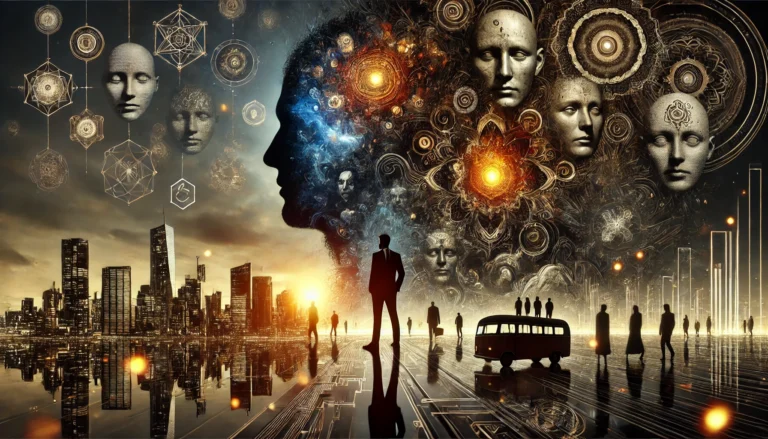
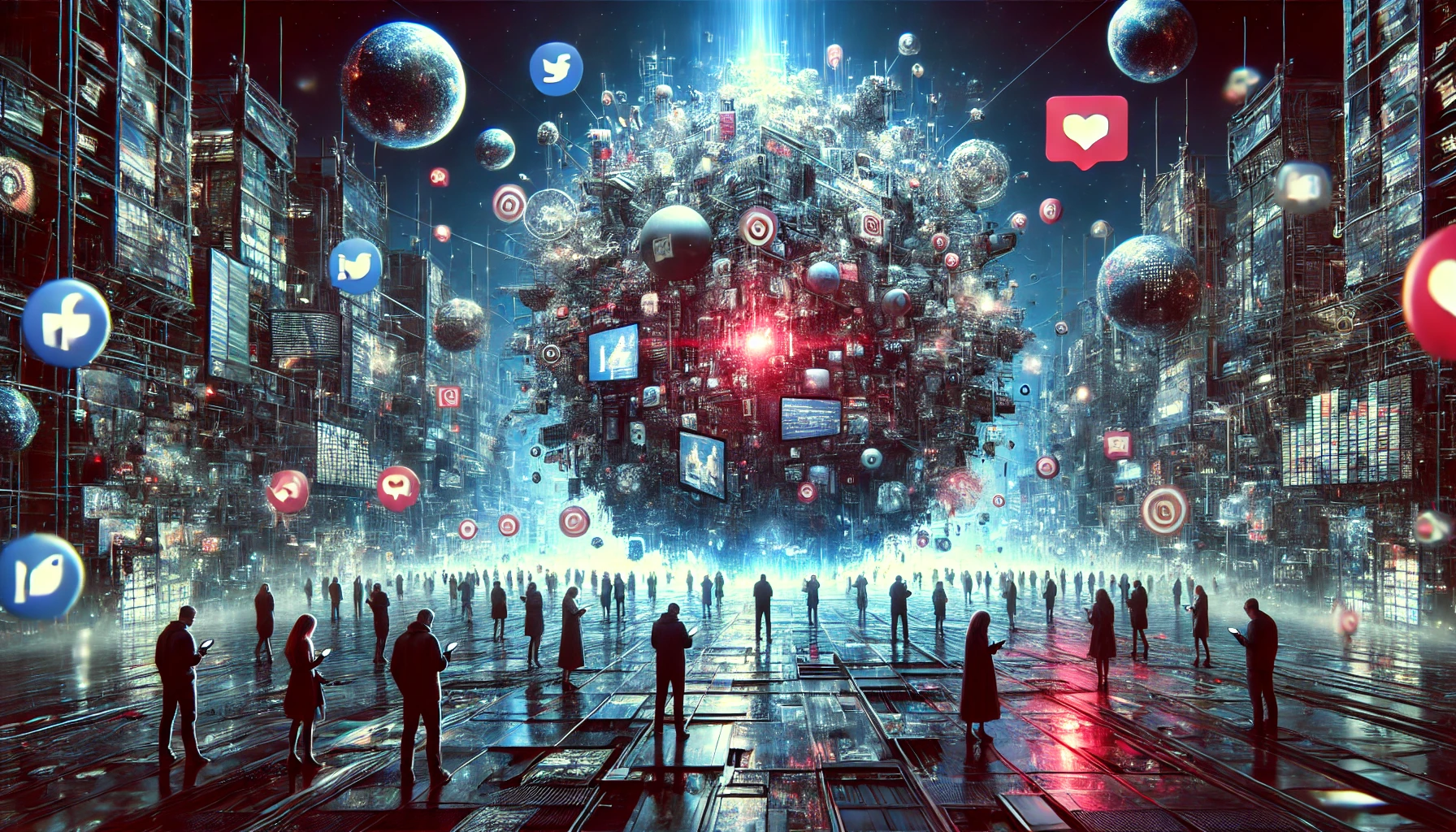
Social media feeds, recommendation algorithms, and online communities continuously filter information according to emotional engagement and behavioral patterns. Over time, people become immersed in ideological bubbles that reinforce existing beliefs while minimizing exposure to opposing perspectives. Different groups begin inhabiting entirely separate psychological and informational realities, each convinced that their interpretation of the world is the correct one.
This fragmentation weakens trust in institutions, governments, journalism, expertise, and even the idea of objective truth itself. When societies lose confidence in shared standards of credibility, disagreement becomes more difficult to resolve. Facts become politicized, narratives compete for dominance, and emotional identity often replaces rational discourse. The result is not merely disagreement, but the gradual breakdown of social cohesion.
Algorithms, Polarization, and Emotional Manipulation
Digital systems often reward emotional intensity more effectively than thoughtful reflection. Content that triggers outrage, fear, anger, or tribal identity tends to spread faster because emotional reactions increase engagement and attention. Algorithms optimized for clicks and interaction unintentionally amplify divisive content because emotionally charged material keeps users active for longer periods of time.
This dynamic accelerates polarization within society. Individuals become increasingly reactive, defensive, and emotionally attached to ideological identities. Nuanced discussion becomes more difficult because digital environments favor simplicity, conflict, and certainty over complexity and understanding. As outrage spreads more rapidly than wisdom, societies become psychologically exhausted and socially fragmented.
Artificial intelligence may intensify this challenge even further. Advanced personalization systems could eventually tailor narratives, emotional triggers, and influence strategies to individuals with extraordinary precision. The future risk is not simply misinformation, but the large-scale manipulation of perception itself. In such environments, maintaining independent thought and constructive dialogue becomes increasingly difficult.
Despite these challenges, rebuilding shared reality remains possible. Meaningful dialogue, critical thinking, media literacy, and conscious communication can help societies resist fragmentation. Trust cannot be restored through technology alone; it requires cultural and psychological maturity as well.
Conclusion The collapse of shared reality represents one of the defining challenges of the digital age. As people retreat into fragmented media ecosystems and ideological bubbles, trust in institutions, expertise, and objective truth continues to weaken. Algorithms that prioritize emotional intensity over thoughtful reflection further deepen division and polarization. Without some degree of shared understanding, societies struggle to maintain stability, cooperation, and meaningful dialogue. The future will depend not only on technological innovation, but on humanity’s ability to rebuild trust, encourage critical thinking, and create spaces where genuine understanding can still emerge in an increasingly fractured information environment.