

The 21st century is not merely an age of change — it is the change of ages.
The convergence of Artificial Intelligence (AI), Artificial General Intelligence (AGI), Synthetic Biology,
and Robotics is rewriting the very rules of human existence. The pace of technological evolution is
so exponential that it now challenges not only how we work and live, but also why we exist.
Figure: Ikigai as a Stack – Integrating Passion, Profession, Vocation, and Mission.
1. From Survival to Significance
For centuries, human civilization has operated under the paradigm of survival — food, shelter, and security.
With industrial and digital revolutions, survival transformed into success, measured through wealth,
status, and consumption. Yet, as AI and automation take over human tasks, the question before humanity
is no longer “How do we survive?” but “Why do we exist?” This question moves humanity from an extrinsic,
money-driven world to an intrinsic, purpose-driven one — from the old rules to the next rules.
2. The New Rules of Existence
The image above captures this transition vividly. The traditional model of existence was built on
extrinsic motivations: what you can be paid for, what you are good at, and what brings social validation.
The emerging civilizational model, however, emphasizes intrinsic motivation — what you love and what
the world needs. This represents a move from finite, zero-sum games of competition to infinite games
of co-creation and meaning.
3. Ikigai as the Bridge
Ikigai — a Japanese concept meaning “a reason for being” — integrates four dimensions:
what you love (passion), what you are good at (profession), what you can be paid for (vocation),
and what the world needs (mission). In the age of AI and robotics, Ikigai becomes not just a
philosophical compass but a civilizational strategy for balance between machine efficiency and human essence.
4. The Exponential Technological Context
AI and AGI are now automating cognitive labor, while robotics and synthetic biology are transforming
physical and biological labor. As these frontiers merge, humanity is entering a “phygital” age —
a seamless fusion of the physical, digital, and biological realms. The danger is not extinction by machines,
but extinction by meaninglessness — if human purpose does not evolve faster than machine capability.
5. From Economy to Ecology of Consciousness
Civilizations once organized around kingdoms, nations, and corporations are now reorganizing
around knowledge, consciousness, and trust. The future belongs to those who build ecosystems
that integrate technological intelligence with spiritual wisdom — creating not domination,
but Dharma; not profit, but purpose; not control, but co-evolution.
6. Conclusion
The changing rules of human existence demand a radical redefinition of success.
As machines master productivity, humans must master meaning. The “Next Rules” of civilization
will not be written in code alone but in consciousness. Ikigai, when understood as a living
stack of purpose, offers the blueprint for the coming era — where technology serves life,
and life, in turn, evolves consciousness.
About the Author
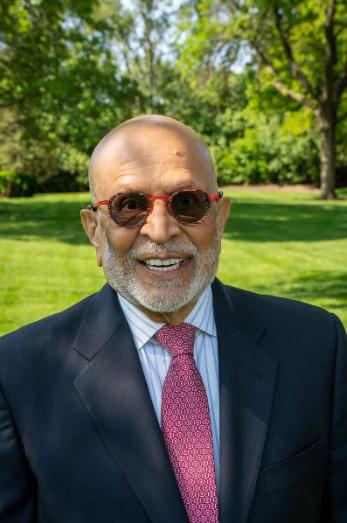
Vivek Singhal is a thought leader, systems thinker, and author of *Dominion and Dharma: Reframing Capitalism*.
An alumnus of IIT Delhi and the University of Michigan, he explores the intersection of technology,
consciousness, and civilization. His work envisions a future where Dharma (balance and consciousness)
guides Dominion (power and progress).