
Part 8 blog series about From Education to Credentialed Obedience: How the Post-WWII World Manufactured the “Stupid Generation” — An OSHO-Inspired Reflection
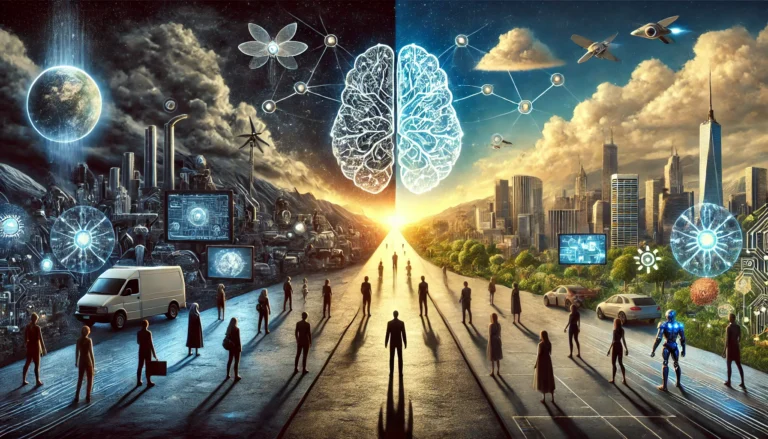
Periods of disruption have always forced civilizations to confront uncomfortable truths about themselves. Times of stability often allow societies to continue operating through familiar assumptions, routines, and systems without deep reflection. Crises, however, expose hidden weaknesses and reveal the limitations of existing models of thinking. The rise of artificial intelligence is creating exactly this kind of civilizational turning point. Humanity is being pushed to question long-held assumptions about intelligence, identity, work, meaning, and even consciousness itself. These are no longer abstract philosophical discussions reserved for scholars and thinkers. They are becoming survival questions that may shape the future direction of civilization.
Although technological disruption creates uncertainty and instability, it also contains the potential for transformation. The same forces disrupting old systems may also open the door to deeper awareness, ethical evolution, and a more mature understanding of human progress.
Crisis as a Catalyst for Reflection
Throughout history, major disruptions have often accelerated periods of social and intellectual transformation. Wars, economic collapses, scientific revolutions, and technological breakthroughs have repeatedly forced societies to rethink their structures and priorities. The AI era is creating a similar moment of reflection because it challenges assumptions about what makes humans unique and valuable.
As machines become increasingly capable of performing cognitive tasks once considered exclusively human, people are beginning to ask deeper questions about meaning and purpose. If intelligence alone can be replicated or automated, then human value may need to be understood through qualities beyond pure intellectual performance. Emotional depth, ethical reasoning, creativity, empathy, self-awareness, and consciousness itself may become increasingly important in defining human identity.
This shift creates discomfort because it destabilizes familiar economic and cultural systems. Many individuals fear job displacement, social instability, or the loss of control over rapidly advancing technologies. Yet crises often reveal opportunities hidden beneath fear. They force humanity to examine whether existing models of success, growth, and progress are truly sustainable or sufficient for long-term flourishing.
The Need for Inner Development
The AI era is exposing a fundamental imbalance within modern civilization. Humanity has developed extraordinary external power through science and technology, but emotional maturity and ethical development have not advanced at the same pace. Technological capability alone cannot guarantee wisdom, stability, or collective well-being. In fact, powerful technologies can magnify confusion and instability when they are guided by fear, greed, or short-term thinking.
This realization may become one of the hidden opportunities inside the current crisis. Humanity may begin recognizing that lasting progress requires more than innovation and economic expansion. Stable societies also depend on psychological resilience, ethical responsibility, emotional intelligence, and the capacity for conscious cooperation. Without these qualities, advanced systems may deepen division and instability rather than solve them.
The growing uncertainty of the modern world could therefore encourage deeper forms of awareness and personal growth. Individuals and societies may increasingly understand that inner development is not separate from civilizational survival, but essential to it. The future may depend not only on smarter machines, but on wiser humans capable of guiding technological power responsibly.
Conclusion
The crises emerging in the AI era contain both danger and opportunity. Rapid technological disruption is forcing humanity to confront deeper questions about intelligence, meaning, consciousness, and the future of civilization itself. While these transformations create fear and uncertainty, they also encourage societies to reevaluate old assumptions and explore more mature models of progress. The hidden opportunity within this disruption is the possibility of recognizing that external advancement alone is not enough. Lasting stability and human flourishing also require emotional maturity, ethical thinking, psychological resilience, and greater self-awareness. If humanity can develop these qualities alongside technological innovation, the current crisis may become a turning point toward a more conscious and balanced civilization.