
A Journey from inner awakening to civilizational transformation
by Vivek SInghal
Introduction: A World in Transition
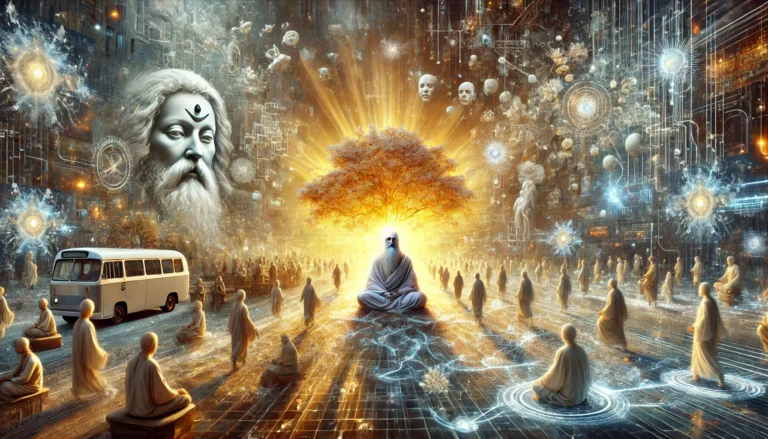
Humanity is living through a profound civilizational transition. Much like the Industrial Revolution or the rise of the digital age, today’s changes are reshaping politics, economics, culture, technology, and human identity. While institutions continue to function, many of the assumptions that created them are becoming increasingly inadequate. Rising polarization, declining trust, social fragmentation, and growing mental health challenges are not isolated problems but signs of a deeper transformation.
The Growing Gap Between Power and Wisdom
Modern civilization has achieved extraordinary progress. Scientific discoveries, technological innovations, economic growth, and global connectivity have dramatically improved human life. However, the expansion of power has not been matched by an equivalent growth in wisdom.
Knowledge enables humanity to build powerful systems and technologies, but wisdom determines how those capabilities should be used. As societies become more influential and interconnected, the consequences of poor judgment become far greater. The central challenge of the twenty-first century is not a shortage of power but a shortage of wisdom capable of guiding it responsibly.
The Hidden Crisis of Modern Civilization
Beneath visible political, economic, and cultural conflicts lies a deeper crisis of meaning and coherence. Modern societies have become highly effective at generating wealth and information, yet many people experience loneliness, uncertainty, anxiety, and a loss of purpose.
Civilizations depend not only on institutions but also on shared values, narratives, and beliefs that provide legitimacy and direction. When these foundations weaken, trust declines, communities fragment, and social stability becomes more difficult to maintain. The true crisis is therefore civilizational rather than merely political or economic.
Civilization’s Operating System
Every civilization operates through an invisible framework of assumptions about reality, human nature, success, and purpose. This “operating system” shapes institutions, laws, education, economics, and culture.
The modern world inherited an operating system largely designed during the industrial era. It emphasizes productivity, efficiency, consumption, and economic growth. While these priorities generated remarkable prosperity, they are increasingly insufficient for addressing today’s complex challenges. Societies must reexamine the assumptions underlying their institutions if they hope to adapt successfully.
The Evolution of Human Consciousness
Human history can be viewed as an evolution of consciousness. Tribal societies focused on survival, agricultural civilizations emphasized stability and order, industrial societies prioritized production and progress, and the Information Age centered on knowledge and connectivity.
Each stage expanded human capabilities while creating new limitations. Today, humanity faces the challenge of integrating knowledge with wisdom, freedom with responsibility, and technological power with ethical judgment. This emerging stage requires broader awareness and a deeper understanding of interconnected systems.
Rediscovering Human Nature
The book argues that human beings cannot be understood solely as consumers, workers, or rational actors. People are biological, emotional, social, moral, and meaning-seeking beings. Modern institutions often address physical and economic needs while neglecting deeper human needs such as belonging, purpose, character, and self-understanding.
A flourishing civilization must recognize the full complexity of human nature and create systems that support both material well-being and personal development.
From Ego to Authentic Self
As traditional structures weaken, individuals face greater responsibility for creating their own identities and life purpose. True authenticity involves more than self-expression. It requires self-awareness, reflection, humility, and the ability to distinguish enduring values from temporary impulses.
Individuals who cultivate self-understanding become more adaptable, resilient, and capable of navigating complexity. Such personal development is not only beneficial for individuals but also essential for healthier institutions and societies.
From Desire to Meaning
Desire has always been a driving force behind human progress. However, the quality of desire matters. Modern societies are highly effective at stimulating consumption and ambition but often provide little guidance regarding what is genuinely worth pursuing.
Human flourishing emerges when desire matures beyond material acquisition toward meaning, contribution, service, creativity, and wisdom. Civilizations thrive when they channel human aspirations toward constructive and purposeful goals.
Toward a Civilization of Wisdom
The Industrial Age successfully addressed problems of scarcity and production, but it cannot serve as humanity’s final model. Future progress requires moving beyond economic growth as the sole measure of success. Prosperity remains important, but flourishing also includes social trust, purpose, well-being, cultural vitality, environmental stewardship, and wisdom.
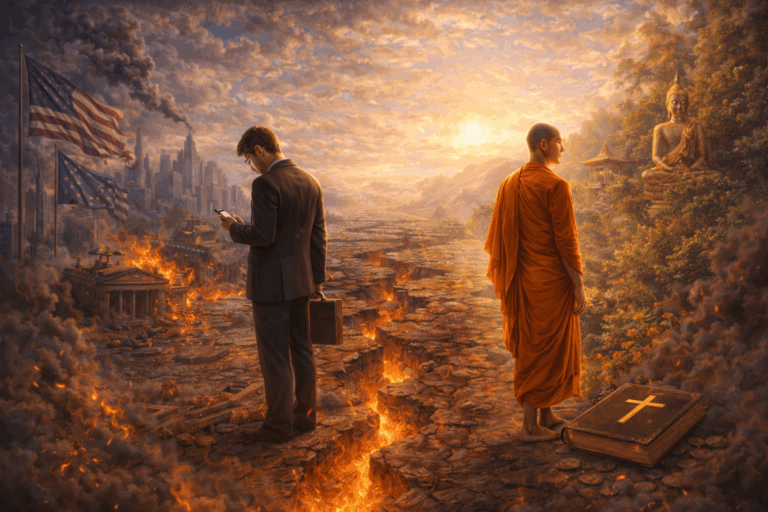
The future depends on humanity’s ability to align power with responsibility and innovation with ethical judgment. The transition from duality to dharma represents a movement from fragmentation to integration, from power alone to wisdom-guided progress. Whether civilization succeeds in this transformation may determine the character of the century ahead
Read Full Version Here – From Duality to Dharma: Civilizational Renewal in the Age of Wisdom