By Vivek Singhal and Prachi Rastogi
Executive Summary
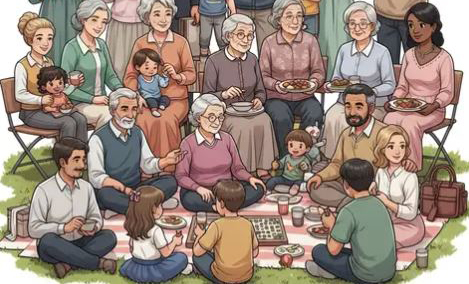
Every generation grows out of its own cultural and technological soil. Baby Boomers were raised in the optimism of postwar reconstruction, Generation X in an era of self-reliance and liberalization, Millennials in the turbulence of globalization and financial crashes, and Generation Z in the hyperconnected but anxious world of social media and climate crises.
The result is a set of generational cultural and knowledge gaps sharper than any in modern history. These gaps are not just social inconveniences — they pose risks to businesses, governance, and civilization itself.
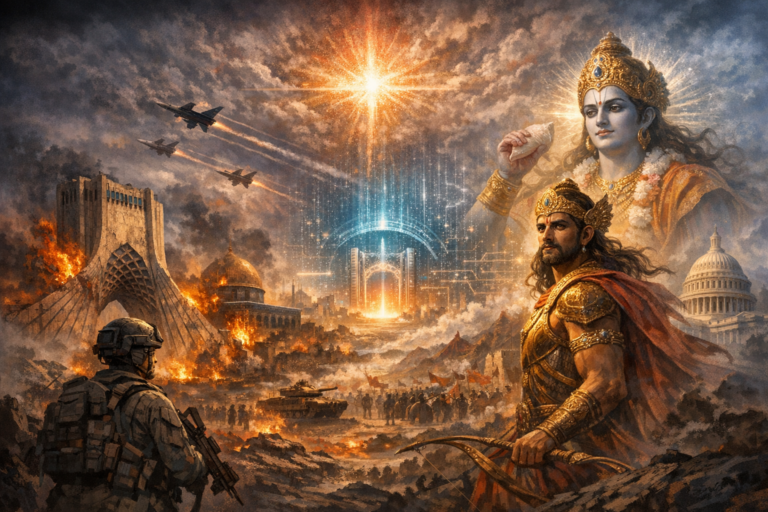
This essay applies the Dominion and Dharma framework (from Vivek Singhal’s Dominion and Dharma) to explain these gaps and propose ways to bridge them. Dominion emphasizes conquest, control, and efficiency. Dharma emphasizes balance, alignment, and reciprocity. Where dominion overshoots, dharma emerges to correct. Bridging the generations requires not “choosing a side” but cultivating Resilient Compassion — toughness with tenderness, wisdom with warmth.
Introduction: The Silent Battle of Contexts
Every generation insists it has the correct worldview — until history proves otherwise. Boomers believed in the strength of institutions, Gen X in self-reliance, Millennials in balance, and Gen Z in inclusivity and authenticity. Yet these differences, left unchecked, are deepening into fractures across workplaces, schools, families, and even nations.
The root of these gaps is context. Each generation was socialized by a different technological and cultural environment. A Boomer raised on radio and scarcity and a Gen Z raised on TikTok and abundance occupy not just different ages, but different civilizational worlds.
The Dominion and Dharma framework offers a way to see these divides not as permanent barriers but as complementary truths waiting for integration.
Generations and Their Contexts
Baby Boomers (1946–1964): Builders of Institutions
– Born in the shadow of WWII and the optimism of industrial expansion.
– Dominion: Corporations, bureaucracies, loyalty, hierarchy.
– Dharma: Civil rights, nonviolence, environmentalism (though secondary).
Generation X (1965–1980): Resilient Pragmatists
– Grew up amid oil shocks, liberalization, Cold War’s end, and early computing.
– Dominion: Skepticism of authority, hard pragmatism.
– Dharma: Adaptability, jugaad innovation, bridging analog to digital.
Millennials (1981–1996): Seekers of Balance
– Shaped by 9/11, the 2008 crash, and globalization.
– Dominion: Debt, hustle, precarious jobs.
– Dharma: Demand for balance, mental health, and purpose at work.
Generation Z (1997–2012): Authentic Innovators
– Digital natives, raised amid social media, climate anxiety, and diversity movements.
– Dominion critique: Fragile, entitled.
– Dharma reframing: Purpose-driven, inclusive, emotionally intelligent.
Generation Alpha (2013 onward): The Phygital Beings
– Still emerging, but immersed in AI, VR, and biotechnology.
– Dominion temptation: Algorithmic control and surveillance.
– Dharma potential: Creativity, consciousness, and interdependence.
The Gaps That Divide
1. Technology Gap: Analog → Cloud → AI. Dominion reads this as obsolescence; Dharma reframes it as complementarity.
2. Authority Gap: Hierarchy vs. authenticity. Dominion fears rebellion; Dharma redefines authority as trust, not tenure.
3. Work Ethic Gap: Long hours vs. boundaries. Dominion glorifies sacrifice; Dharma insists on sustainability.
4. Emotional Gap: Suppression vs. openness. Dominion calls silence strength; Dharma values truth in vulnerability. The bridge = resilient compassion.
5. Diversity Gap: Dominion fears fragmentation; Dharma honors multiplicity (Vasudhaiva Kutumbakam).
Resilient Compassion: The Bridge
The heart of bridging is synthesis, not compromise.
– Stoicism without sensitivity breeds cruelty.
– Sensitivity without resilience collapses into fragility.
Resilient Compassion integrates both:
– At work: tough goals and respect for boundaries.
– At home: survival stories and emotional honesty.
– In civilization: efficiency and consciousness.
This dharmic synthesis allows generations to carry each other, not cancel each other.
Case Studies
Workplace: Gen Z vs. Gen X Face-Off
In a recent intergenerational debate, Gen X executives framed Gen Z as emotionally fragile, while Gen Z professionals described themselves as purpose-driven and inclusive. The clash illustrates dominion’s suspicion of softness and dharma’s recognition of authenticity. The solution is not to pick a winner but to combine both: Gen X resilience with Gen Z inclusivity.
Education: Gurukul Meets Digital Classroom
Traditional Gurukuls emphasized wisdom, character, and satsang. Today’s classrooms emphasize metrics, algorithms, and testing. Dharma suggests the bridge: integrate coding with contemplation, AI with ethics, and productivity with presence.
Family: Scarcity vs. Abundance
Boomers, raised in scarcity, valued thrift; Gen Z, raised in abundance, values experiences. Dominion sees waste vs. indulgence; Dharma reframes it as balance — abundance with responsibility.
Bridging Frameworks
1. Reciprocal Mentorship: Elders teach resilience, juniors teach relevance.
2. Tech Translation Tables: Deliberate forums where TikTok natives and boardroom veterans explain their worlds.
3. Shared Purpose Platforms: Aligning sustainability as both profit strategy and dharmic duty.
4. And-Also Education: Teaching paradox navigation as a life skill — profit and purpose, hierarchy and collaboration.
5. Inter-Generational Councils: Town halls, family sabhas, and community forums where all voices are heard.
Why It Matters Now
– AI & the Phygital Age: Machines will optimize dominion. Only humans can practice dharma.
– Global Governance: Empires collapse when dominion overshoots. A new order must blend youthful innovation with elder wisdom.
– Civilizational Survival: The greatest danger is not war or climate change, but the inability to integrate generational truths.
Conclusion: From Division to Dharma
Generational gaps are not failures. They are evolutionary invitations. Dominion gave humanity strength; Dharma gives humanity balance.
– Boomers offer legacy.
– Gen X offers resilience.
– Millennials offer adaptability.
– Gen Z offers authenticity.
– Alphas will bring new consciousness.
The future depends not on mocking each other across age lines but weaving these truths into a civilizational fabric of Resilient Compassion.
Bridging generational divides is no longer optional. It is the dharmic necessity for human survival in the phygital age.