
Part 4 blog series about From Education to Credentialed Obedience: How the Post-WWII World Manufactured the “Stupid Generation” — An OSHO-Inspired Reflection
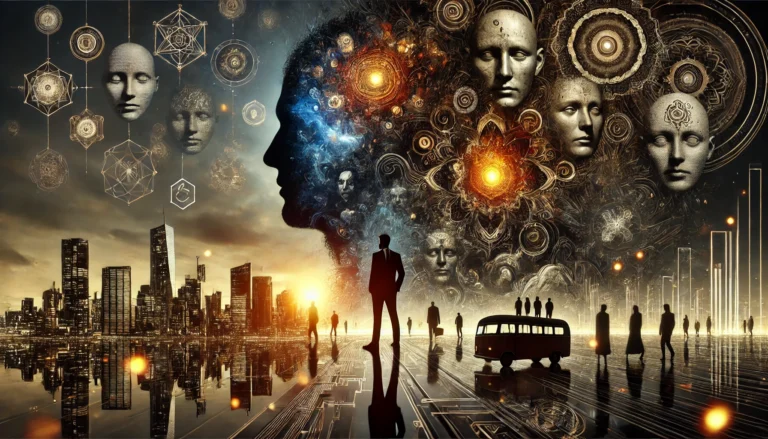
Osho argued that humanity’s greatest prison is not physical limitation, but unconscious conditioning. According to his perspective, most people move through life shaped by inherited beliefs, fears, social expectations, and ideological systems without ever deeply examining them. Individuals often assume their thoughts and identities are entirely their own, while much of their thinking has actually been programmed by external influences such as family structures, education systems, religion, politics, and media. This unconscious conditioning quietly shapes how people perceive reality, respond emotionally, and define themselves.
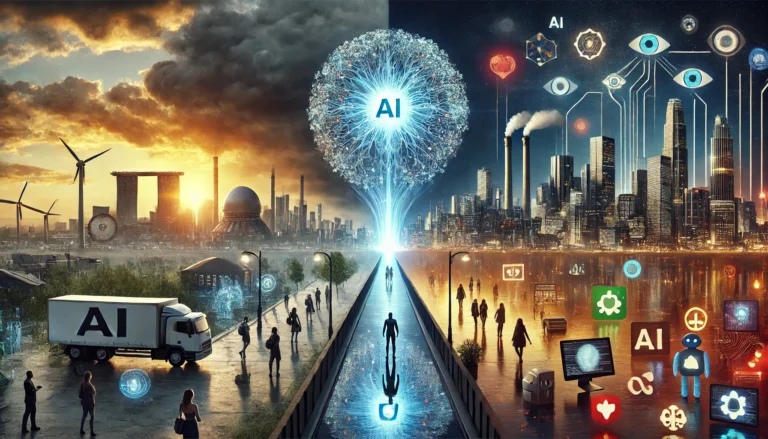
In the modern digital age, this insight has become even more relevant. Human attention is now constantly influenced by algorithms, online narratives, and persuasive technological systems designed to shape behavior. The crisis of conditioning is no longer limited to traditional institutions alone. It now operates continuously through digital platforms that influence identity, emotion, and perception at a global scale.
The Invisible Nature of Conditioning
One of the most powerful aspects of conditioning is that it often remains invisible to the person experiencing it. People rarely recognize how deeply their beliefs and reactions are shaped by external systems because conditioning becomes normalized from an early age. Schools teach certain ways of thinking, societies reward conformity, political systems shape public narratives, and media platforms influence emotional responses. Over time, individuals may confuse these inherited patterns with authentic freedom and personal identity.
Osho emphasized that awareness is the key to breaking this unconscious cycle. Awareness creates a space between automatic reaction and conscious understanding. Instead of immediately responding through fear, anger, ideology, or social pressure, an aware person begins to observe the internal mechanisms shaping their behavior. This observation weakens unconscious programming and allows individuals to think independently rather than mechanically repeating collective patterns.
Without awareness, however, human beings become highly programmable. They react emotionally to external stimuli without recognizing how their emotions are being manipulated or directed. This creates societies that are vulnerable to propaganda, fear-based politics, consumer manipulation, and digital influence systems.
The Digital Age and Psychological Manipulation
The rise of digital technology has intensified the crisis of conditioning in unprecedented ways. Algorithms now influence what people see, believe, discuss, and emotionally react to every day. Social media platforms are designed to capture attention, reinforce emotional engagement, and encourage addictive behavior patterns. Over time, these systems shape not only opinions but also identity and psychological well-being.
This environment creates a new challenge for humanity. The future may not simply depend on technological advancement, but on the ability of individuals to remain psychologically awake inside highly persuasive systems. A person who lacks awareness can easily become controlled by algorithms, trends, outrage cycles, and collective emotional reactions without realizing it. In contrast, a conscious individual develops the capacity to observe these influences without becoming entirely consumed by them.
The digital age therefore demands a deeper level of inner clarity than previous eras. As systems become more sophisticated in shaping attention and behavior, awareness becomes an essential form of psychological freedom. The ability to remain conscious amid constant stimulation may become one of the most important human skills of the future.
Conclusion
Osho’s insight into unconscious conditioning offers a powerful lens for understanding the modern world. Human beings are continuously shaped by social, political, religious, and technological systems, often without recognizing the extent of that influence. In the digital age, algorithms and persuasive platforms have amplified this conditioning by constantly shaping attention, emotions, and identity. The central challenge of the future may therefore not only involve managing advanced technology, but preserving human awareness within systems designed to influence behavior. Developing self-awareness and psychological clarity may become essential for maintaining freedom, individuality, and conscious living in an increasingly programmed world.