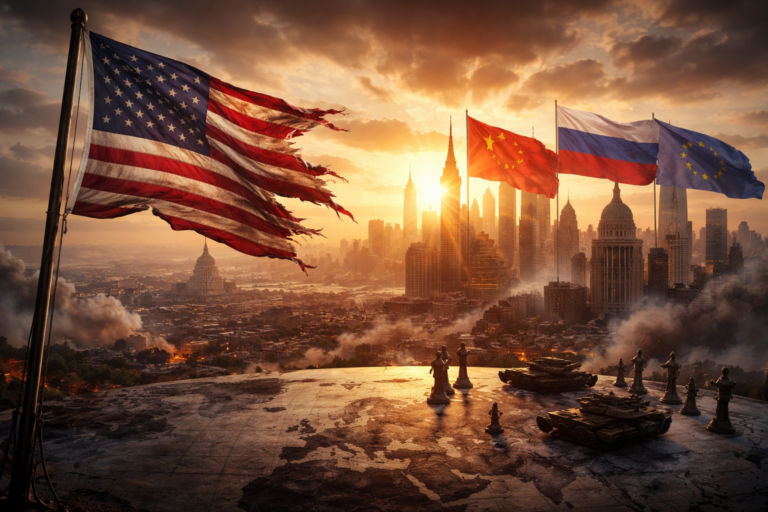
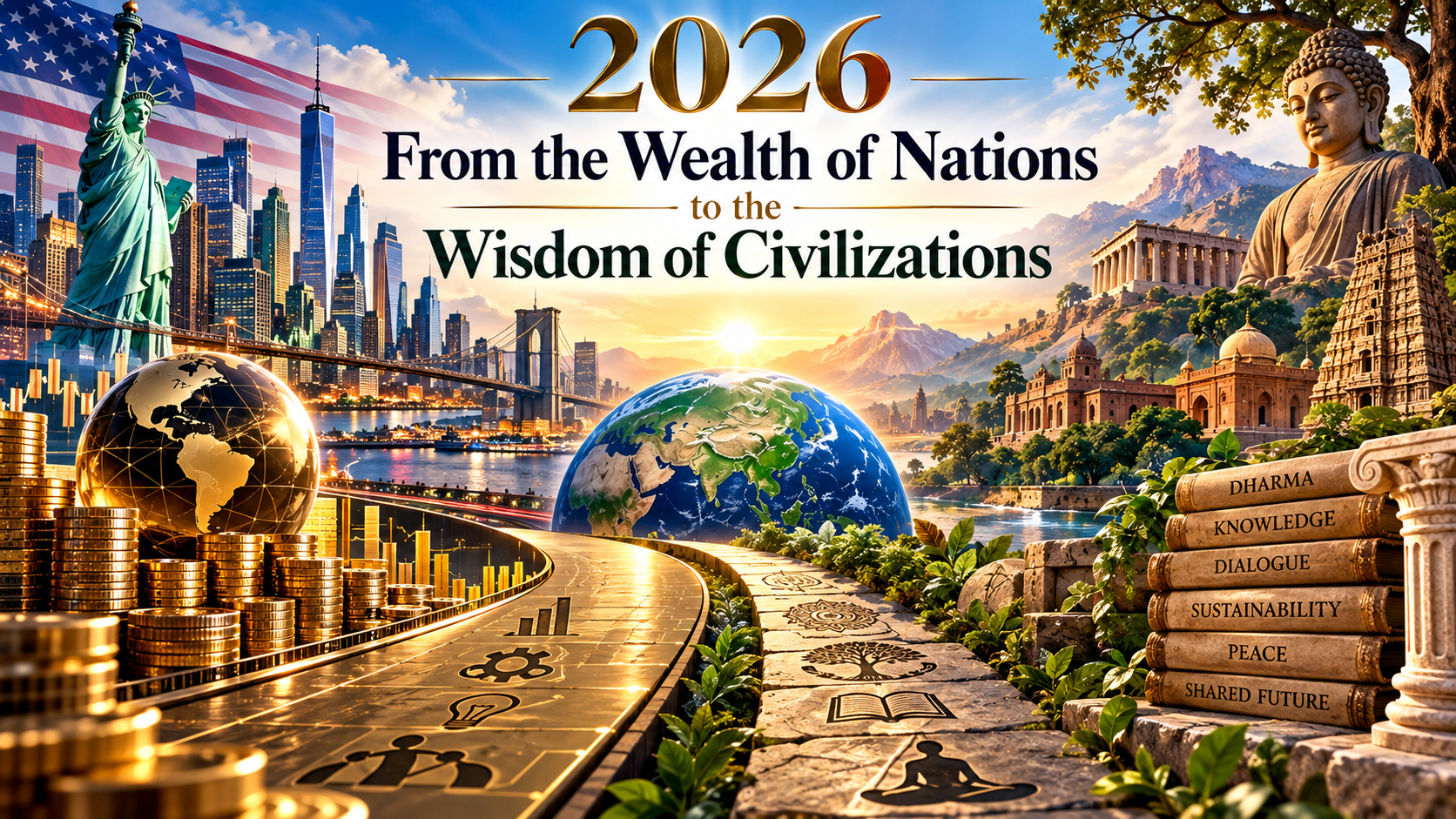
2026 marks a remarkable historical moment: 250 years after two influential texts helped shape modern political economy. Adam Smith published The Wealth of Nations in 1776, while the American Declaration of Independence was adopted on July 4 of that year. One examined material prosperity; the other articulated political liberty, rights, and government by consent. Together, they helped define an era of wealth, industrial expansion, and technological power.
Yet the promises of 1776 were never fully realized. Political equality coexisted with slavery, dispossession, exclusion, and restricted participation. Commercial freedom generated abundance while also contributing to concentrated power, inequality, ecological damage, and imperial extraction. The question for 2026 is how those unfinished promises can be extended.
This is where BRICS+ becomes significant. Originally, BRIC was an acronym coined by Goldman Sachs economist Jim O’Neill in 2001 to describe Brazil, Russia, India, and China as major emerging economies. The countries transformed an external investment classification into a platform for political and economic agency. BRICS developed institutions such as the New Development Bank and expanded its membership. Its significance will depend on whether rising power is paired with ethical responsibility, institutional pluralism, civilizational dialogue, ecological stewardship, and shared human purpose globally.
BRICS+ is not a military alliance, unified government, common currency, or single ideological bloc. Its members have different political systems, interests, and regional priorities. India and China, for example, cooperate within BRICS while remaining strategic competitors. These differences define the experiment.
The DDDI™ framework interprets multipolarity through four dimensions: Dominion, Dharma, Destiny, and Identity. Dominion asks who possesses the capacity to act, create, govern, finance, and innovate. Dharma asks what responsibilities and limits should guide that power. Destiny examines the future produced by accumulated choices. Identity asks who belongs within the political and civilizational “We.”
The challenge is preventing multipolarity from becoming a new competition for dominance. Several centers of power could produce balance, but also fragmentation and danger. DDDI™ therefore proposes a shift from counter-hegemony toward responsible interdependence.
This requires Both/And-Also™. Nations can preserve sovereignty while recognizing planetary interdependence. Markets can generate wealth while operating within ethical and ecological boundaries. Competition can coexist with cooperation. Scientific and technological advancement can be joined with consciousness, responsibility, and human dignity. Civilizational identities can remain distinct without becoming claims of superiority.
The paper draws on Osho as a metaphor for movement from energy to awareness. Human ambition has produced science, infrastructure, wealth, and technology. But Dominion without awareness can become domination. The task is to transform its direction: consumption into regeneration, ownership into stewardship, information into wisdom, and technological intelligence into conscious intelligence.
“Shoonya se Anant ki Aur,” from openness toward the infinite, becomes another metaphor for this transition. The next Wealth of Nations should increasingly become a Wealth of Humanity, measured not only by GDP, resources, and trade, but also by natural capital, human capability, social trust, ecological regeneration, learning, health, and shared flourishing.
The DDDI™ agenda includes reformed global governance, responsible development finance, financial resilience, trustworthy artificial intelligence, civilizational dialogue, and broader measures of wealth. The objective is to create institutions capable of accommodating many centers of power.
2026 can become pivotal if humanity chooses conscious design over inherited rivalry. The future will not be determined simply by whether the West declines or BRICS+ rises. It will depend on whether every center of power learns to place capability in the service of responsibility.
That is the deeper journey: from the wealth of nations to the wisdom of civilizations, from Dominion to Dharma, and from isolated power toward an interconnected human future.
READ MORE HERE – 2026 From the Wealth of nations to the Wisdom of Civilizations