
Meta Description: The End of Pax Americana explores 5 powerful shifts reshaping global power, identity, and the future of international order.
The concept of Pax Americana— a period of relative global stability led by the United States after World War II— is entering a decisive turning point. According to the DDDI™ white paper , this shift is not sudden but the result of long-term structural tensions between power, morality, and identity. As the United States approaches its 250th anniversary in 2026, the world stands at a civilizational crossroads.
The Rise: Power Built on Industry and Ideals
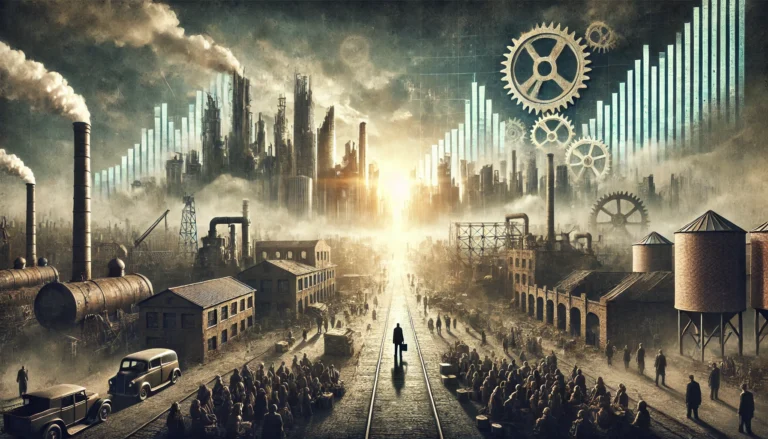
The roots of Pax Americana can be traced back to 1893, when America showcased its industrial might at the Chicago World’s Fair. At the same time, Swami Vivekananda introduced a message of spiritual inclusivity. This pairing of material strength and moral vision laid the foundation for American global leadership.
Throughout the 20th century, two world wars propelled the United States into a dominant role. Institutions like the United Nations, IMF, and World Bank formalized this leadership. The Bretton Woods system made the U.S. dollar the backbone of global finance, allowing America to shape economic systems worldwide.
The Apex: Unchallenged Dominance
After the Cold War, the United States entered what scholars called the “unipolar moment.” With no major rivals, American influence reached its peak. However, this dominance came with hidden risks.
Economic globalization, especially the integration of China into global trade, led to massive gains for corporations but hollowed out domestic manufacturing. Meanwhile, technological leadership reinforced America’s position but also fueled financial speculation and inequality.
The Overreach: Cracks in the System
The turning point came in the early 21st century. The 9/11 attacks revealed how asymmetric threats could challenge even the most powerful nation. The wars in Iraq and Afghanistan further strained America’s credibility, exposing a gap between its ideals and actions.
The 2008 financial crisis deepened this crisis of trust. Major institutions were bailed out while ordinary citizens bore the consequences, reinforcing perceptions of inequality and systemic failure.
The Unraveling: Internal and External Pressures
In recent years, multiple forces have accelerated the decline of Pax Americana:
- Rising global competitors, especially China, building alternative financial and political systems
- Technological disruption, including AI and digital platforms reshaping economies and societies
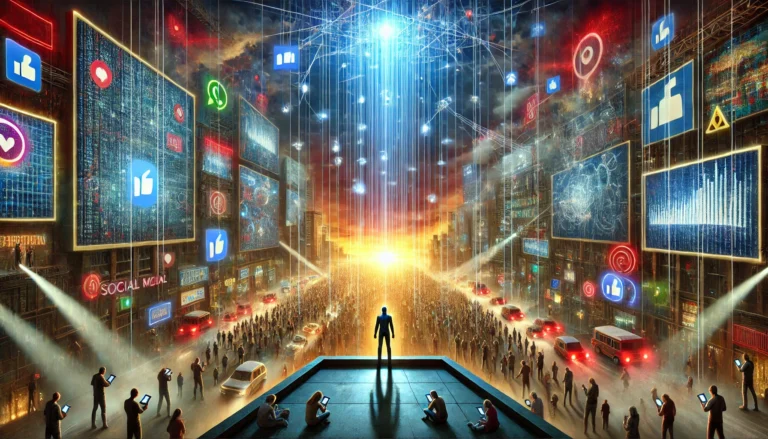
- Social fragmentation, driven by identity politics and algorithm-driven media
- Institutional distrust, amplified during the COVID-19 pandemic
These developments signal not just a geopolitical shift, but a deeper civilizational transformation.
Liberation Day and a New Direction
The white paper highlights “Liberation Day” (April 2, 2025) as a symbolic moment marking the end of America’s traditional global role. The shift toward protectionism reflects growing dissatisfaction with globalization, particularly among working-class communities.
However, this transition also raises critical questions: What replaces Pax Americana? And how can global stability be maintained in a multipolar world?
The DDDI™ Framework: A Path Forward
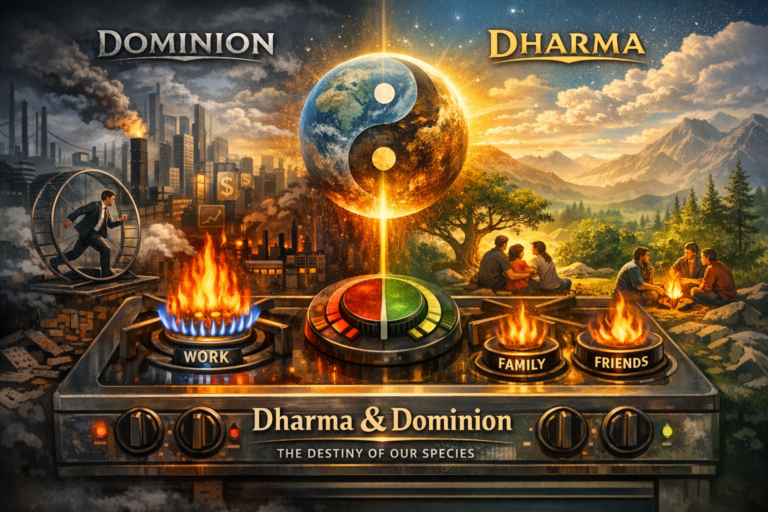
The DDDI™ framework—Dominion, Dharma, Destiny, and Identity—offers a lens for understanding both the collapse and potential renewal of global order.
Dominion: Power must be legitimate, not just strong
Dharma: Moral responsibility must guide decision-making
Destiny: The future is shaped by conscious choices, not inevitability
Identity: Shared civic values must replace divisive tribalism
Conclusion: From Pax Americana to Pax Pluralis
The end of Pax Americana is not merely a decline—it is a transition. A new global system, potentially more plural and decentralized, is emerging. Whether this leads to conflict or cooperation depends on how nations balance power with purpose.
As the United States reflects on its founding ideals, the challenge is clear: to align its actions with its principles and help shape a world order that is both stable and just.