Part 11 blog series about From Education to Credentialed Obedience: How the Post-WWII World Manufactured the “Stupid Generation” — An OSHO-Inspired Reflection
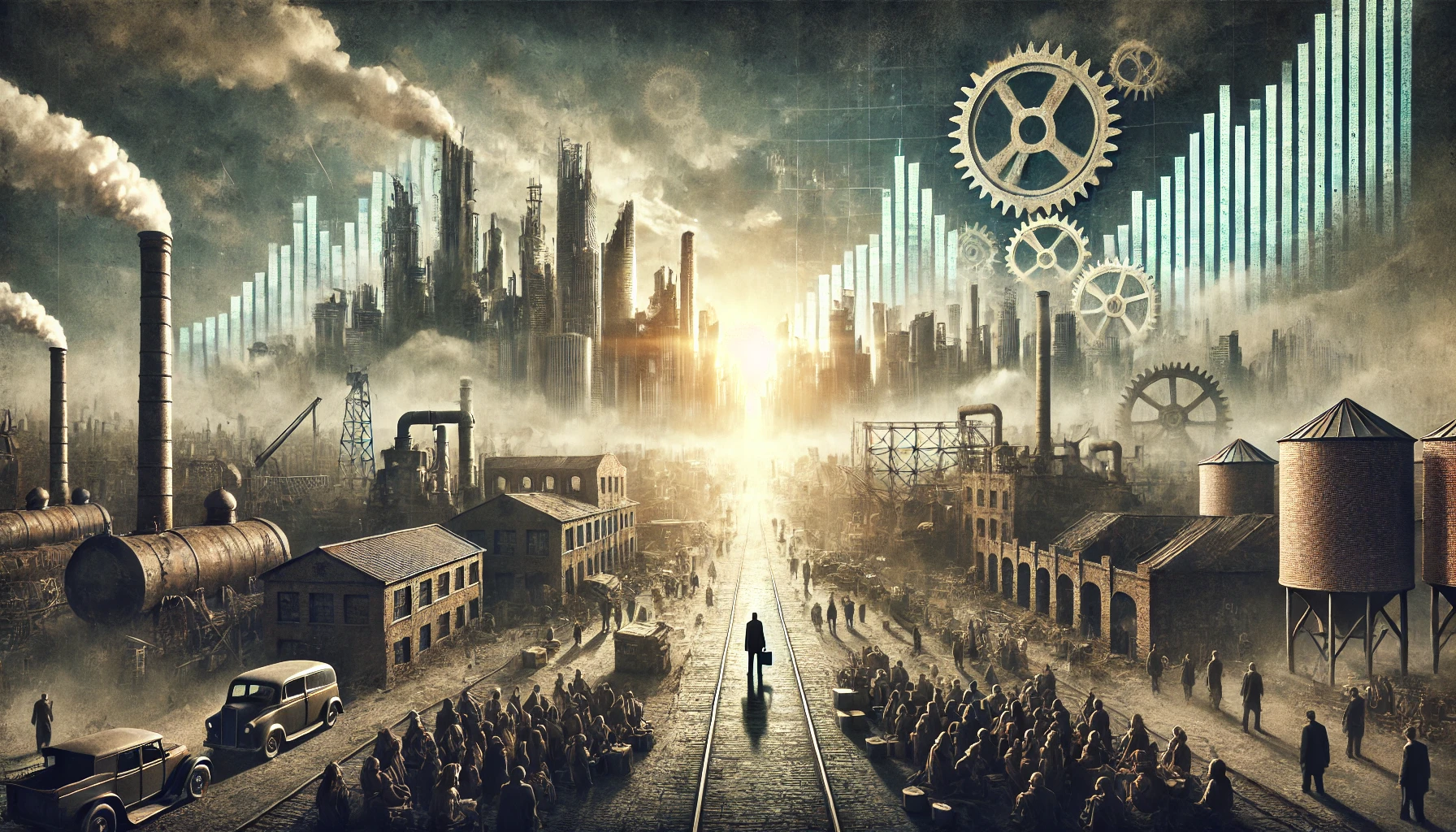
The Great Depression was far more than an economic collapse. It represented a profound psychological rupture that reshaped the relationship between individuals, institutions, and government across the modern world. Millions of people lost jobs, savings, businesses, and homes within a relatively short period of time. Beyond financial devastation, the crisis shattered confidence in economic systems and deeply affected people’s sense of security, identity, and trust in the future. The Depression revealed how fragile modern societies could become when large-scale systems fail unexpectedly.
In response to this instability, governments expanded centralized institutions and intervention programs dramatically. Welfare systems, labor protections, financial regulations, and federal support structures emerged not only as economic reforms, but also as psychological stabilizers designed to restore public confidence and social order. While these systems provided critical support, they also transformed the relationship between individuals and institutional structures in lasting ways.
Economic Collapse as Psychological Trauma
The Great Depression demonstrated that economic crises are never purely financial events. Work, income, and economic participation are deeply connected to identity, meaning, and emotional stability. When millions suddenly lost employment and security, the psychological effects were enormous. Anxiety, hopelessness, fear, and uncertainty spread rapidly throughout society.
For many individuals, the collapse undermined faith in existing institutions and social structures. People who had previously trusted markets, banks, and economic systems suddenly experienced vulnerability on a massive scale. This psychological rupture forced societies to confront the reality that modern systems could fail in ways capable of destabilizing both economies and human consciousness simultaneously.
The crisis also changed public expectations regarding the role of government and institutions. Citizens increasingly looked toward centralized systems for protection, stability, and reassurance. In many ways, the Depression accelerated the development of system-dependent societies where large institutions became central to economic survival and social organization.
While these reforms reduced instability and helped prevent future collapses, they also created deeper psychological reliance on institutional systems for security and meaning. Modern civilization became increasingly interconnected, centralized, and dependent on complex organizational structures that individuals often had little control over personally.
AI, Automation, and the Future of Dependency
The AI era may create disruptions that resemble aspects of the Great Depression, though in different forms. Automation and artificial intelligence are already transforming industries, labor systems, and economic structures at extraordinary speed. As machines become capable of replacing or reshaping large categories of work, many individuals may experience not only economic uncertainty but also deeper existential questions related to purpose, identity, and value.
Work has historically provided more than income alone. It often gives people structure, community, identity, and meaning. Large-scale automation could therefore create psychological disruptions beyond simple job displacement. Societies heavily dependent on institutional and technological systems may become increasingly vulnerable if those systems evolve faster than people can emotionally adapt.
This creates an important warning for the future. System-dependent societies may appear stable during periods of prosperity, but they can become psychologically fragile during moments of rapid disruption. If individuals rely entirely on external structures for identity and security, sudden systemic changes may trigger widespread anxiety, polarization, and instability.
The challenge of the AI era may therefore involve not only economic adaptation, but strengthening human resilience, flexibility, and inner stability in the face of accelerating technological change.
Conclusion
The Great Depression revealed that economic collapse can also become a profound psychological crisis. Beyond financial devastation, it transformed how individuals related to institutions, governments, and systems of security. The expansion of centralized welfare and intervention programs helped stabilize society, but it also increased dependence on large institutional structures for protection and meaning. As artificial intelligence and automation reshape the modern economy, similar disruptions may emerge in new forms. The Depression serves as a warning that technologically advanced societies can remain psychologically fragile when identity and stability depend too heavily on external systems. The future may require not only stronger institutions, but also greater human resilience, adaptability, and psychological awareness in an increasingly automated world.